V.
VIGHNESH KUMBHAR01 / 01

Secret Vault

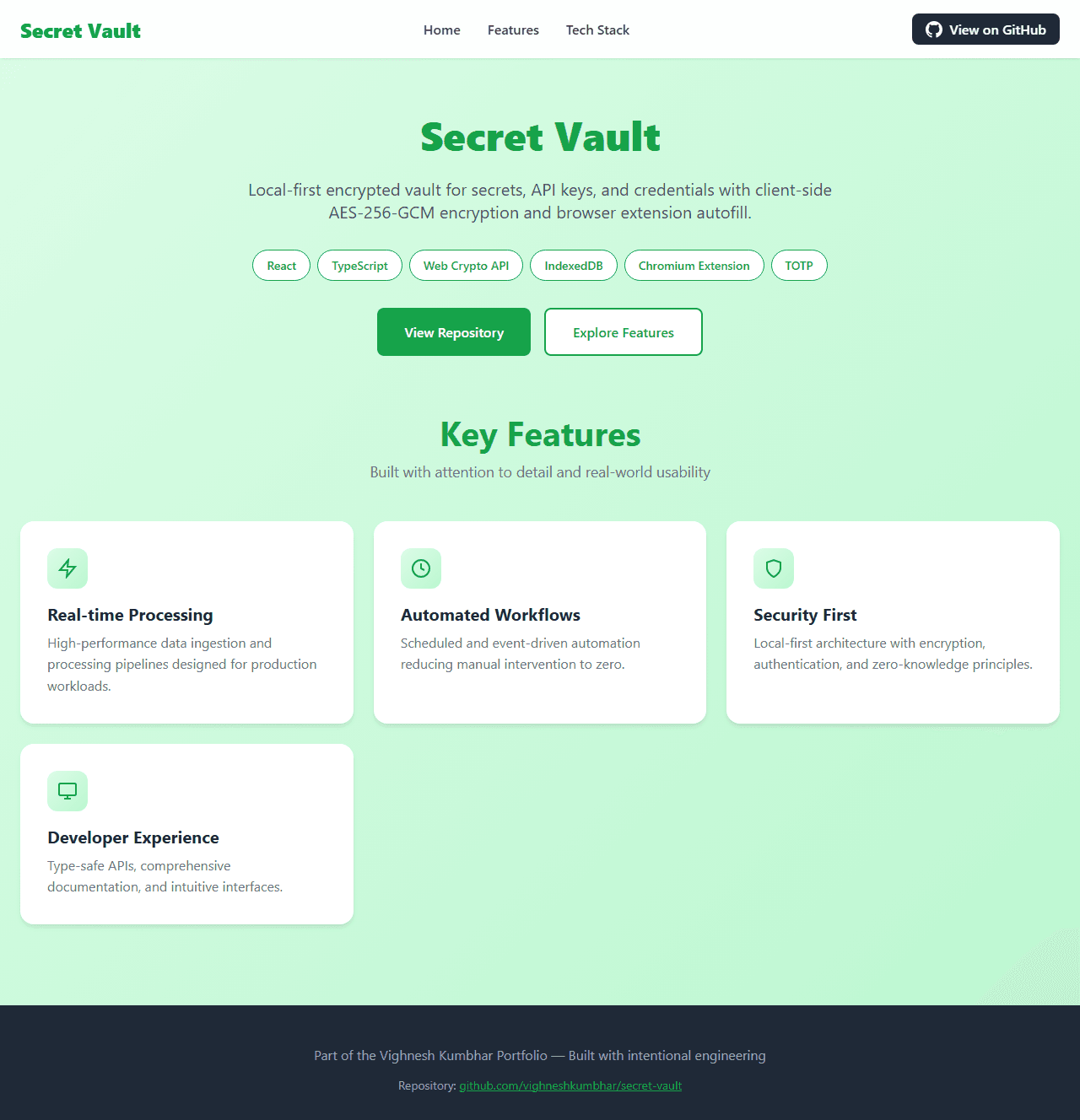
Local-first encrypted vault for secrets, API keys, and credentials with client-side encryption, zero-knowledge architecture, and browser extension integration.

Experimental build

Secret Vault source screenshot
AES256
SEC / VAULTCASE / 24
VERIFIED SOURCE MATERIALReact / TypeScript / Vite

The premise.

Secret Vault is a privacy-focused credential manager: AES-256-GCM encryption in the browser, master key derived via PBKDF2, zero server knowledge. Includes Chromium extension for autofill, export/import, and TOTP generation.

Cloud password managers are breach targets. Local-first with client-side encryption keeps secrets on your device — no sync, no cloud, no trust required.

How it is structured.

The repository evidence points to these observable boundaries and technologies:

  • React + Vite frontend
  • Web Crypto API (AES-256-GCM, PBKDF2)
  • IndexedDB for encrypted storage
  • Manifest V3 extension for autofill
  • TOTP implementation (RFC 6238)

From idea to system.

  • Master password → PBKDF2 (100k iterations) → encryption key
  • Per-entry AES-256-GCM with unique IV
  • Encrypted blob stored in IndexedDB
  • Extension reads/writes via native messaging
  • TOTP codes generated client-side
  • Export/import encrypted backup files
ReactTypeScriptViteWeb Crypto APIIndexedDBChromium Extension APIsTailwind CSS

The difficult parts.

  • Web Crypto API browser compatibility
  • IndexedDB quota limits for large vaults
  • Extension native messaging host setup
  • Secure clipboard handling for autofill

What can be said honestly.

  • Encryption/decryption working in Chrome/Firefox
  • Extension autofill on credential forms
  • TOTP generation matching Google Authenticator
  • Encrypted backup/restore cycle verified

Client-side crypto is viable with Web Crypto API. Extension native messaging adds complexity but enables secure autofill without DOM injection.